
Nvidia Steps Into Model Routing
Model routing sends each prompt to the cheapest capable model, and Nvidia just launched its own version to trim AI bills.
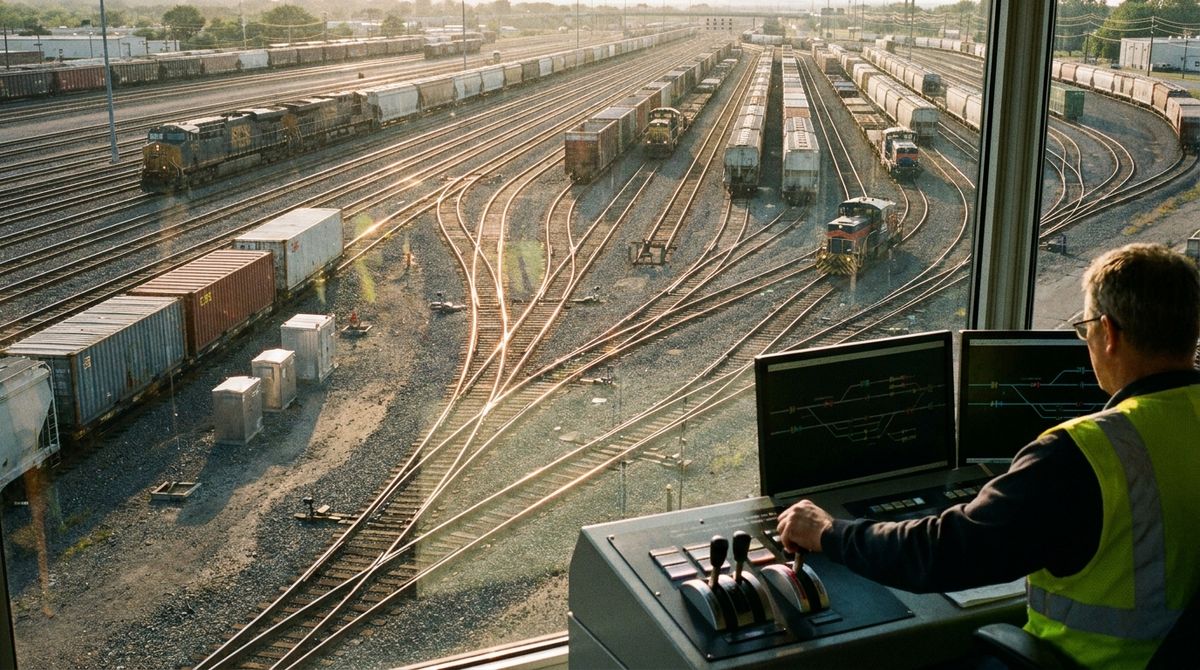
Picture a busy train station. Trains keep arriving, and someone in a control room decides which platform each one goes to so the whole system keeps moving. Now swap trains for AI requests, and you have roughly the idea behind a fast-growing corner of the AI world: model routing.
Nvidia has just planted a flag there with a new tool called NeMo Switchyard. The name nods to the rail yards where cars get sorted onto the right tracks, which is a fitting metaphor for what the technology does with your prompts.
What model routing actually does
When you send a request to an AI system, it does not have to go to the biggest, most expensive model every time. A lot of questions are simple. Some are hard. Model routing examines each prompt and directs it to the most appropriate model for the job. In plain terms, it tries to find the cheapest model that can still answer well.
That matters because "inferencing," the process of a trained AI model generating a response, costs money every single time it runs. If you can route the easy stuff to a smaller, cheaper model and save the heavyweight models for genuinely tricky requests, you handle work more efficiently, get more accurate results, and spend less at runtime.
What Nvidia is offering
NeMo Switchyard is Nvidia's take on this idea. Rather than a single fixed way of routing, it provides a library that lets developers apply multiple routing approaches. The pitch is what Nvidia calls a "system-of-models" approach, where you treat a collection of models as a coordinated group instead of leaning on one do-everything model.
The practical goal is to help developers build agents that are more efficient and more controllable. An "agent," in this context, is an AI system that can carry out multi-step tasks on your behalf. Give it smarter routing under the hood, and it can pick the right tool for each step instead of throwing the same expensive model at everything.
Why this is suddenly a hot market
The timing is not a coincidence. Interest in model routing is climbing both as a tool and as an investment, and that is happening in an era of rising AI spending. Companies are watching their AI bills grow, and routing is one of the more direct levers for keeping those costs in check.
Nvidia is not alone here. Cloudflare recently rolled out a model router as part of a new suite of enterprise AI tools. And according to The Wall Street Journal, the payments company Stripe is looking to buy OpenRouter. When an infrastructure giant, a networking company, and a payments firm all circle the same idea, that is a decent signal that routing has moved from clever trick to serious business.
It is worth being clear about what we do not yet know. The Stripe move is reported as a potential acquisition, not a done deal. And launching a routing library is one thing; proving it reliably saves money across messy real-world workloads is another. Those results will show up in practice, not press releases.
What's next
Model routing points to a quieter shift in how AI gets built. For a while, the instinct was to reach for the single largest model available and hope it handled everything. The emerging view is more pragmatic: assemble a mix of models and let a router decide who does what, moment to moment.
If that approach sticks, the interesting competition may not be over which model is biggest, but over who routes traffic the most intelligently. Nvidia clearly wants a say in that. The next thing to watch is whether developers actually adopt Switchyard, and whether the promised efficiency shows up on the bill.