
Local America Is Blocking AI Data Centers
Local bans on new data centers topped 500 in July, a bipartisan pushback that could complicate Big Tech's AI expansion plans.
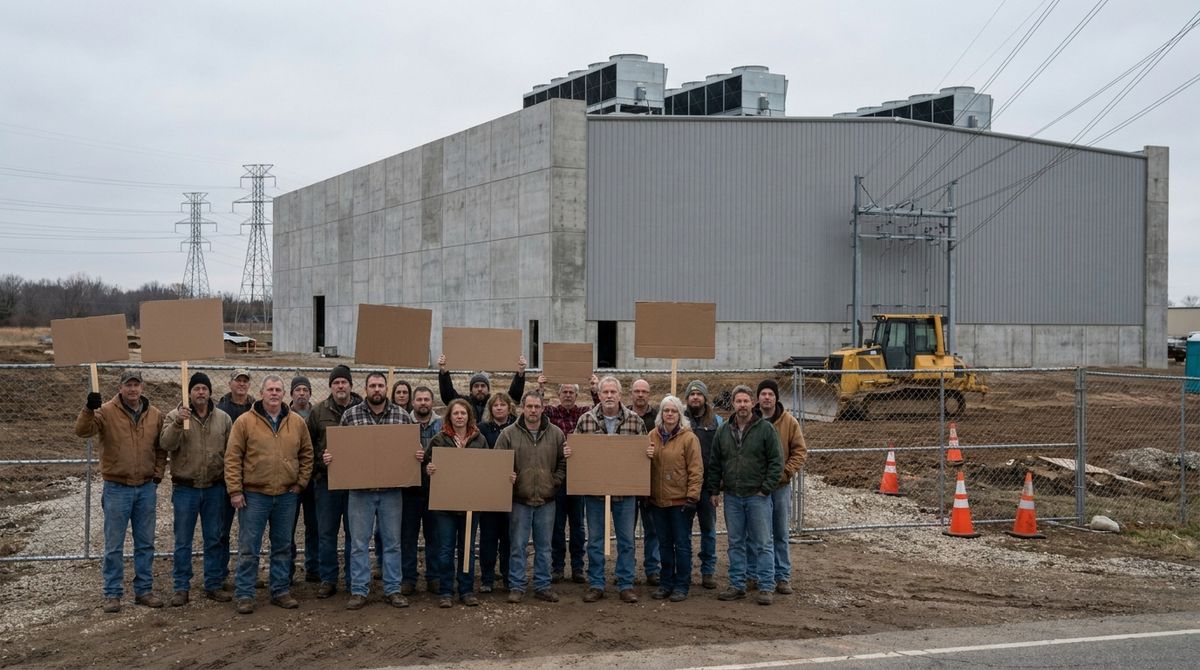
Building an AI empire needs a lot of things: chips, cash, and above all, land with plenty of power and water. That last part is turning into a problem, because the places being asked to host these giant computing warehouses are increasingly saying no.
According to analysis by The Information, the number of local bans and moratoriums on new data center developments in the United States jumped past 500 in July. That is up from around 300 in late June. When your opposition doubles in a month, it is no longer a fringe complaint.
What is actually happening
A data center is a large building packed with computer servers, and the AI boom has sent demand for them soaring. These facilities run hot and hungry, drawing enormous amounts of electricity and water to keep their machines cool and running.
The Information pulled its figures from legal documents and local news reports. It found that local politicians, from tiny rural counties to big urban ones, are refusing to approve new construction. This is not politicians acting on a whim. They are responding to residents worried about noise, and about data centers competing with households for water and electricity.
The list of examples is long. Texas Governor Greg Abbott recently paused approvals until an audit is done of companies wanting to plug new centers into the state grid. New York Governor Kathy Hochul signed an executive order pausing approval of any data center that consumes 50 megawatts or more. Massachusetts and Nebraska scrapped tax breaks for developers. Around Denver, 19 bans are now in place, driven by concerns over the environment and water use.
Not a red or blue issue
What makes this notable is that it crosses party lines. Republican and Democrat states, towns, and counties are all blocking projects. Texas and New York feature prominently from opposite sides of the political map.
Most of the bans are clustered in the Midwest and South, with more than 400 restrictions now in place. Nearly three-quarters of the moratoriums approved in July were in southern states like Georgia and Florida. Florida is moving especially fast: 14 of its 23 active restrictions were approved in July, with 15 more under consideration.
The resistance is not confined to city hall either. Over 70% of Americans are reportedly against more AI data centers, and at least 37 people have been arrested this year protesting new developments. In Nashville, a proposed 23-acre data center next to a zoo, with a price tag of up to $700 million, is facing both local and political pushback.
Why it matters
AI companies need this capacity. The chatbots, image generators, and assistants everyone is racing to ship all run on servers sitting inside these buildings. If local governments keep blocking sites, the physical expansion needed to power the technology gets slower and more expensive.
There is also a genuine tension worth naming. In Pecos County, Texas, Amazon is still hoping to build a gas power plant to run a data center at the same location, even amid the state's pause. That site is believed likely to become the single biggest source of environmental pollution in the country once operational. When a single project carries that kind of footprint, it is easy to see why neighbors object.
It is worth keeping the caveats in view. These numbers come from a compilation of local documents and news reports rather than a single official register, and "ban" covers everything from outright prohibitions to temporary moratoriums and pulled tax breaks. The trend is clear, but the details vary a lot from place to place.
What is next
The AI industry has spent months talking about compute, energy deals, and ever-bigger clusters. The quieter story is whether local communities will let those plans touch the ground. With more Florida restrictions pending and audits underway in Texas, the coming months will show whether this is a temporary speed bump or a lasting limit on where AI can physically grow. For now, the map of available land just got a lot smaller.