
Meta's Louisiana AI Campus Balloons to 5GW
Meta is pushing its Hyperion supercluster to 5 gigawatts and past $50 billion, testing how much power one AI campus can pull from a rural parish.
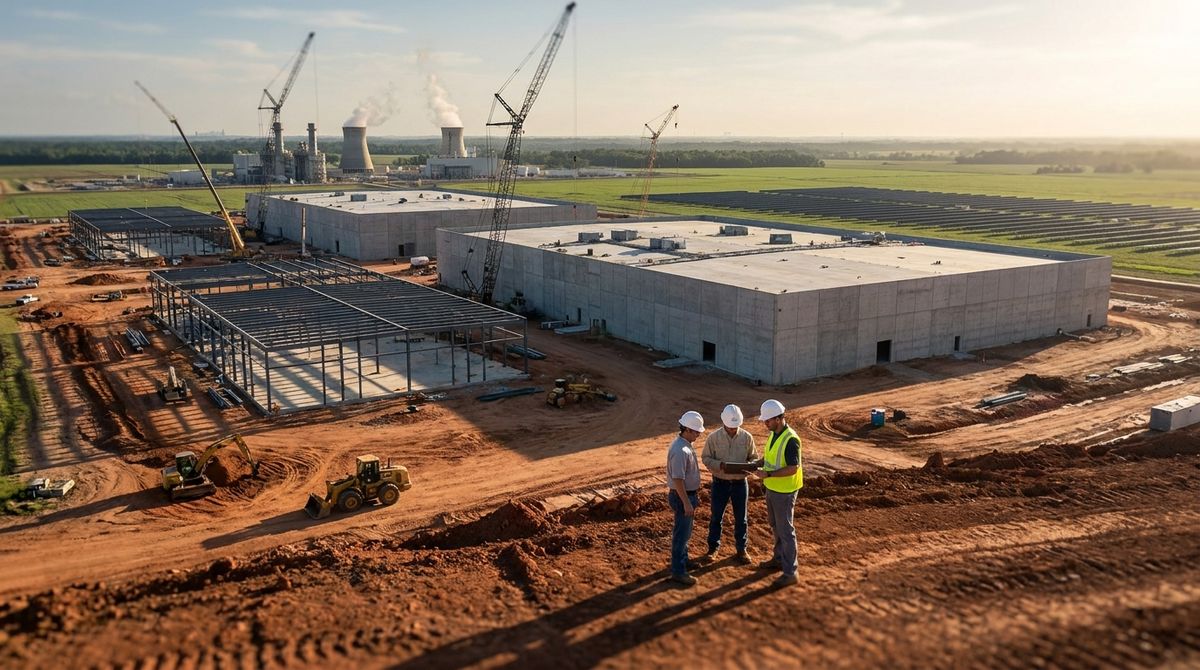
A data center the size of a power plant
Somewhere in Richland Parish, Louisiana, Meta is building a computer so hungry it needs its own gas plants. On July 13, the company confirmed it will expand its Hyperion campus to 5 gigawatts (GW) of compute capacity, up from an initial 2 GW. For scale, a gigawatt is roughly the output of a large power station, so five of them could run a mid-sized city.
That expansion pushes Meta's planned investment in the region past $50 billion. It is a steep climb from the $10 billion, 4-million-square-foot project Meta first unveiled in December 2024.
What Hyperion actually is
Hyperion is Meta's AI supercluster, a giant network of connected servers built to train and run the company's future AI models. CEO Mark Zuckerberg has tied it directly to Meta Superintelligence Labs, the firm's AI division. The 5GW target is not brand new; Zuckerberg floated that figure back in July 2025. What is new is the formal price tag and fresh numbers on jobs, contracts, and public spending.
The financing is worth a glance too. In October 2025, Meta and Blue Owl Capital formed a joint venture valuing the buildings and infrastructure at about $27 billion, with Blue Owl holding roughly 80% and Meta keeping 20% and leasing the finished facilities. Monday's announcement did not explain how the expansion changes that arrangement.
Why the charm offensive
Much of Meta's message was aimed at locals, and for good reason. Data centers this large strain electricity grids and water supplies, and nearby residents worry about their bills. So Meta leaned into the economic upside. Local Louisiana businesses have received more than $1.6 billion in contracts since construction began. Teacher bonuses in Richland Parish rose from $10,000 last year to more than $50,000 this year, funded by tax revenue linked to the campus.
Meta also pledged over $1 billion for local infrastructure, including roads, water, and wastewater systems. Its deal with utility Entergy Louisiana includes natural-gas plants supplying more than 5.2 GW, plus support for up to 2.5 GW of new solar. Entergy says Meta's payments could save other customers around $2 billion over 20 years. That is a projection, not a guarantee, so treat it as a hopeful forecast rather than a done deal.
Who pays, who benefits
Meta is also getting generous public help. In late 2024, Governor Jeff Landry signed a 20-year sales-tax exemption for data centers built before 2029, an explicit move to lure Meta. The company also stands to benefit from the state's Quality Jobs program and a payment-in-lieu-of-taxes deal that could trim its property-tax bill if it hits investment and employment targets.
Hyperion is just one node in a much bigger spend. Meta is forecast to lay out up to $145 billion in capital expenditure in 2026, mostly on AI infrastructure, as demand for AI compute keeps outrunning supply. To help fund it, the company has said it will cut 8,000 jobs. The timing is striking: pouring tens of billions into silicon and gas turbines while trimming headcount.
What's next
The announcement landed after what Meta calls its strongest market week since early 2024, driven by new AI model releases. That momentum helps explain the confidence to keep scaling. The open questions are less about ambition and more about follow-through. Will the promised customer savings and infrastructure upgrades materialize, or stay on the projection slide? And can a rural parish absorb 5 GW of demand without residents feeling the squeeze? Louisiana just became one of the clearest test cases for whether the AI buildout pays off locally, or simply plugs in and pulls hard.