
Etched's AI Chip Bet Hits $10.3B
Three Harvard dropouts built a chip for AI inference, and now investors are writing checks that value it at $10.3 billion.
Once upon a time, a founder slept on a friend's floor and used a towel as a blanket. The servers running his chip-design software lived in another employee's garage, and every time they needed a reboot, that employee phoned his wife to go press the button. A few years later, that founder's company just raised $300 million at a $10.3 billion valuation.
That is the story of Etched, an AI chip startup founded in 2022 by three Harvard dropouts. Its new Series C, led by Sequoia, roughly doubled the company's value in about seven months. The list of backers reads like a tech power lunch: Andreessen Horowitz, SK Hynix, Jane Street, plus earlier investors including Peter Thiel and Dylan Field. Etched says it is the highest valuation ever for a Sequoia-led Series C.
What Etched actually built
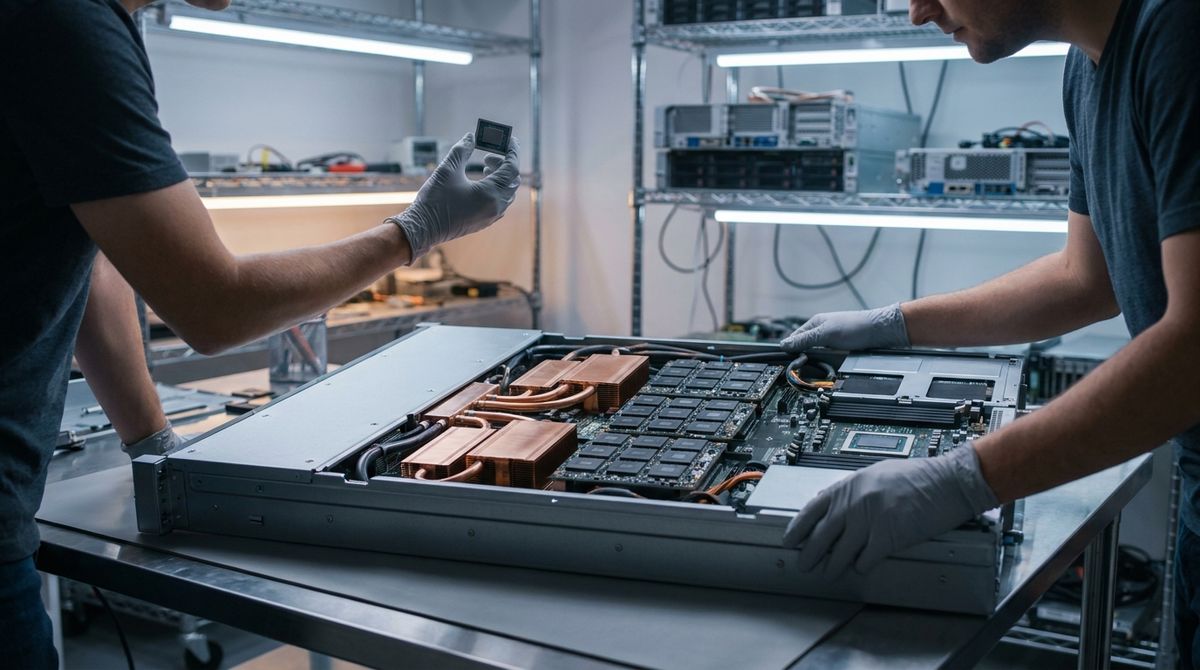
Etched makes chips, but it sells them as full systems, not loose silicon. The company was founded on a then-unfashionable idea: build hardware tuned specifically for transformer models. A transformer is the architecture behind most modern AI, including ChatGPT and Claude. In 2022, staking the whole company on that idea looked reckless. Today it looks like foresight, and Google is reportedly chasing a similar concept with a chip called Frozen v2 for Gemini.
One persistent myth is that Etched's systems only run one specific model. Co-founder Robert Wachen says that is not true. The systems can run Mixture of Experts models like DeepSeek and Qwen (an approach that splits work across specialized sub-models instead of one giant model), and even non-transformer designs like Mamba.
Inference in two acts
Etched's real pitch is speeding up inference, the computing that happens after you hit enter on a prompt. Wachen splits it into two stages. First comes "prefill," where the system digests your prompt and context. That stage is heavy on raw math. Then comes "decode," where the system generates the actual words you read. That stage needs less computation but enormous amounts of memory.
For prefill, Etched built a chip it says runs "dramatically" faster by using lower voltage than rival AI chips. Lower voltage means less heat, which means you can cram in more transistors. The company calls this low-voltage inference. For decode, it built a new memory and connection scheme it calls cluster scale memory, letting many chips share one fast, low-latency memory pool. The promised result is high speed at lower cost.
Why it matters
Inference is where the ongoing cost of AI lives. Training a model happens once, but every user query afterward keeps burning compute. Anything that makes inference cheaper and faster appeals to the companies running these models at scale, which is why the field is crowded with startups trying to loosen Nvidia's grip.
Etched has more than a slide deck. Last month it said it had successfully manufactured its chips through TSMC, that early systems were being tested by clients, and that it had booked $1 billion in orders. It now employs 400 people and runs a 2 megawatt data center. Names who have tried the hardware in private demos include Andrej Karpathy, OpenAI's Noam Brown, and Geoffrey Hinton. Those demos, Wachen says, are how the company won over its marquee investors in the first place.
A caveat worth flagging: access to these systems remains limited to investors and early customers, so independent verification is thin. Much of the skepticism Etched faces stems from exactly that. The order book and performance claims come from the company, not from outside audits.
What's next
The hard part is still ahead. Etched has to move from working lab hardware to mass-produced rack systems shipped to real customers, which is where plenty of promising chip startups stumble. Wachen is candid about it. "We had no idea how hard it was going to be," he says. "I think we still have to be humbled by what it will take to actually get to scale."
Etched made an unpopular bet early, and it appears to be paying off. Whether the systems live up to the demos once they are widely available is the question that will define its next chapter. For now, at least Wachen has upgraded from a towel to multiple pillows.